Understanding the Textile Strength Tester
The textile strength tester is an essential piece of equipment in the textiles and materials industry, designed to evaluate the tensile strength and elasticity of various materials. This testing process plays a critical role in quality control, ensuring that fabrics and materials meet industry standards for durability and performance. The SmartPull Fabric Tensile Tester represents an advanced solution in this domain, offering high accuracy and user-friendly features. When exploring options, an textile strength tester provides comprehensive insights into material properties and performance capabilities.
What is a Textile Strength Tester?
A textile strength tester is an instrument that measures the force required to pull a material until it breaks. It assesses the tensile strength—a critical property that indicates how much tensile (stretching) load a fabric can withstand before failing. Typically, this equipment is utilized in labs and manufacturing facilities where quality assurance is paramount. By providing quantitative data, these testers enable manufacturers to make informed decisions regarding material selection and product development.
Key Components of the SmartPull Tester
The SmartPull Fabric Tensile Tester is built around several key components that work together to ensure precision and reliability. These include:
- AC Servo Motor: This provides stable and adjustable pulling power for tests.
- Ball Screws: They allow for precise control of the pulling force, enhancing test accuracy.
- Load Cells: Essential for measuring applied force, load cells convert mechanical force into an electrical signal.
- Displacement Transducers: These measure the elongation of the material during a tensile test, providing data on how the material behaves under stress.
How Textile Strength Testing Works
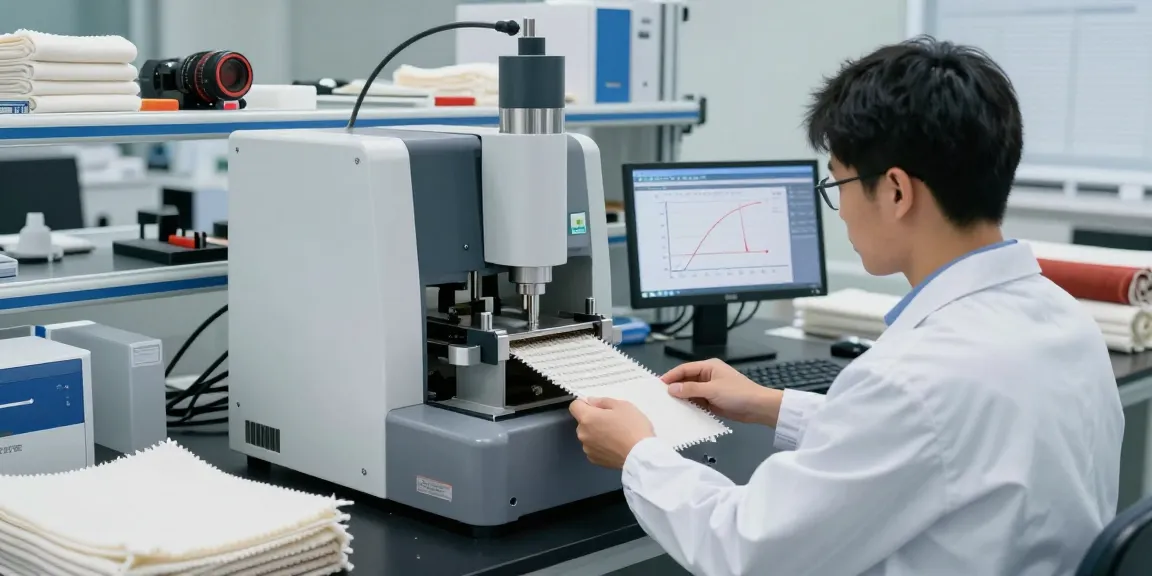
The testing process begins with the preparation of a fabric sample, which is securely clamped at both ends. The tester then applies a tensile force at a controlled speed. As the force is applied, the machine records the maximum force exerted on the sample before it breaks, as well as the elongation at break, which indicates how much the material stretches before rupture. This testing is conducted according to established international standards, such as ASTM D5034 and ISO 13934-1, ensuring consistent and comparable results across different materials and tests.
Advantages of Using a Textile Strength Tester
High Accuracy in Measurement Techniques
The SmartPull tester is designed for high accuracy, with precision control over the test conditions. The use of ball screws and an AC servo motor helps to minimize measurement errors to within 1%. This level of accuracy is crucial for industries where material failure can have significant implications, such as in apparel, automotive, and upholstery.
Safety Features and User Protection
The design of the SmartPull includes several safety features, such as overload protection and the ability to detect excessive torque. These mechanisms safeguard both the user and the machine, allowing for safe operations during testing. This focus on user safety ensures that operators can conduct tests confidently without risking personal injury or equipment damage.
Applications Across Various Materials
A textile strength tester is not limited to testing only fabric. It is capable of evaluating a wide range of materials, including leather, yarn, and even some types of composite materials. This versatility makes it an invaluable tool across multiple sectors, including textiles, automotive, and manufacturing, where understanding the mechanical properties of materials is critical.
Calibration and Maintenance Tips for Optimal Performance
Importance of Regular Calibration
To maintain accuracy, regular calibration of the SmartPull tester is essential. Calibration helps to ensure that the measurements remain consistent and reliable over time. Manufacturers recommend a calibration schedule based on the frequency of use, which could range from monthly to annually, depending on testing volume and environmental factors.
Best Practices for Equipment Maintenance
Regular maintenance of the textile strength tester encompasses a variety of procedures, including keeping the machine clean, checking electrical connections, and ensuring that all mechanical components are functioning smoothly. Operators should be trained to perform routine inspections and maintenance tasks to prolong the life of the instrument.
Common Calibration Mistakes to Avoid
Common pitfalls in calibration include failure to use the correct standards, neglecting to account for environmental conditions, and improper adjustment of machine settings. Operators should familiarize themselves with the calibration procedure outlined in the user manual and be vigilant about the testing surroundings to achieve the best results.
Interpreting Test Results and Their Implications
Understanding Stress-Strain Curves
The output from a textile strength test is often represented as a stress-strain curve. This graphical representation plots the stress (force per unit area) against the strain (deformation) of the material. Analyzing this curve enables engineers and quality control analysts to understand how a material performs under load, revealing insights into its elasticity, strength, and potential failure points.
Metrics for Evaluating Fabric Quality
Key metrics derived from tensile testing include tensile strength, elongation at break, and modulus of elasticity. These indicators provide invaluable data for evaluating fabric quality and are essential for compliance with industry standards.
How Results Impact Material Selection
Accurate test results influence decisions on material selection for specific applications. Understanding the mechanical properties of materials helps manufacturers choose fabrics that will perform adequately under expected stresses, improving product durability and customer satisfaction.
Future Trends in Textile Strength Testing
Emerging Technologies for Enhanced Testing
The future of textile strength testing lies in the integration of advanced technologies such as AI, machine learning, and IoT. These innovations can streamline data analysis, improve the accuracy of testing, and enhance the overall user experience, enabling quicker decision-making in material development.
Predictions for Testing Standards in 2026
As material science evolves, so too do the standards governing tensile testing. By 2026, we can expect more stringent testing protocols aimed at ensuring higher reliability and performance of materials. This may include expanded requirements for testing under various environmental conditions and the incorporation of more precise measuring technologies.
The Role of AI in Textile Testing
Artificial intelligence is poised to revolutionize textile testing by automating processes and enhancing data interpretation. AI-driven systems can analyze complex datasets to identify patterns that human analysts might overlook, leading to improved material performance predictions.
What types of materials can be tested with a textile strength tester?
Textile strength testers can evaluate a variety of materials, such as woven fabrics, knitted textiles, leather, and synthetic materials. Each material type provides different challenges and requires specific testing methods to accurately assess its mechanical properties.
How often should a textile strength tester be calibrated?
Calibration frequency varies depending on usage and environmental conditions. Regular checks are recommended to ensure continual accuracy, with many laboratories opting for a calibration schedule of 6 to 12 months.
What are the safety features of the SmartPull tensile tester?
The SmartPull tensile tester includes several safety features, such as overloading protection, automatic shutoff in case of malfunction, and built-in sensors for detecting excessive torque and displacement, ensuring safe operation during testing.
Can the textile strength tester be used for custom applications?
Yes, the SmartPull tensile tester is versatile and can be customized for various testing applications. Depending on the specific needs of the user, different fixtures and configurations can be employed to accommodate unique material types and testing requirements.
What is the typical pricing range for textile strength testers?
Pricing for textile strength testers can vary widely based on specifications and features. Entry-level models may start around $3,000, while high-end models can exceed $100,000, particularly those with advanced features and capabilities.